- Click Raven
- Posts
- Canva did not win on product alone, they won distribution; here is how
Canva did not win on product alone, they won distribution; here is how
Learn how Canva's programmatic SEO at scale helped the company scale to $40B and over 70m organic traffic.

Ian Mutuli
April 06, 2026
Sponsored by

Hi there, welcome to this week’s Click Raven Teardown, where we unpack how companies broke through and made it to the other side of unicorn status.
This week’s teardown is Canva. We look at how Canva grew to become a $40billion unicorn with over 70m monthly organic visitors.
Before we dive in, we’re grateful to our sponsors below for helping keep this content free.
How Jennifer Aniston’s LolaVie brand grew sales 40% with CTV ads

The DTC beauty category is crowded. To break through, Jennifer Aniston’s brand LolaVie, worked with Roku Ads Manager to easily set up, test, and optimize CTV ad creatives. The campaign helped drive a big lift in sales and customer growth, helping LolaVie break through in the crowded beauty category.
Are you tracking agent views on your docs?

AI agents already outnumber human visitors to your docs — now you can track them.
Turn AI into Your Income Engine
Ready to transform artificial intelligence from a buzzword into your personal revenue generator?
HubSpot’s groundbreaking guide "200+ AI-Powered Income Ideas" is your gateway to financial innovation in the digital age.
Inside you'll discover:
A curated collection of 200+ profitable opportunities spanning content creation, e-commerce, gaming, and emerging digital markets—each vetted for real-world potential
Step-by-step implementation guides designed for beginners, making AI accessible regardless of your technical background
Cutting-edge strategies aligned with current market trends, ensuring your ventures stay ahead of the curve
Download your guide today and unlock a future where artificial intelligence powers your success. Your next income stream is waiting.
How Canva built ~70M monthly visits
Most people think Canva won with product.
They didn’t.
Even though Canva as a product was and still is a very good product, there are several competitors in the same niche with equally good products.
They won with distribution first, product second.
And their biggest growth engine?
Programmatic SEO at absurd scale.
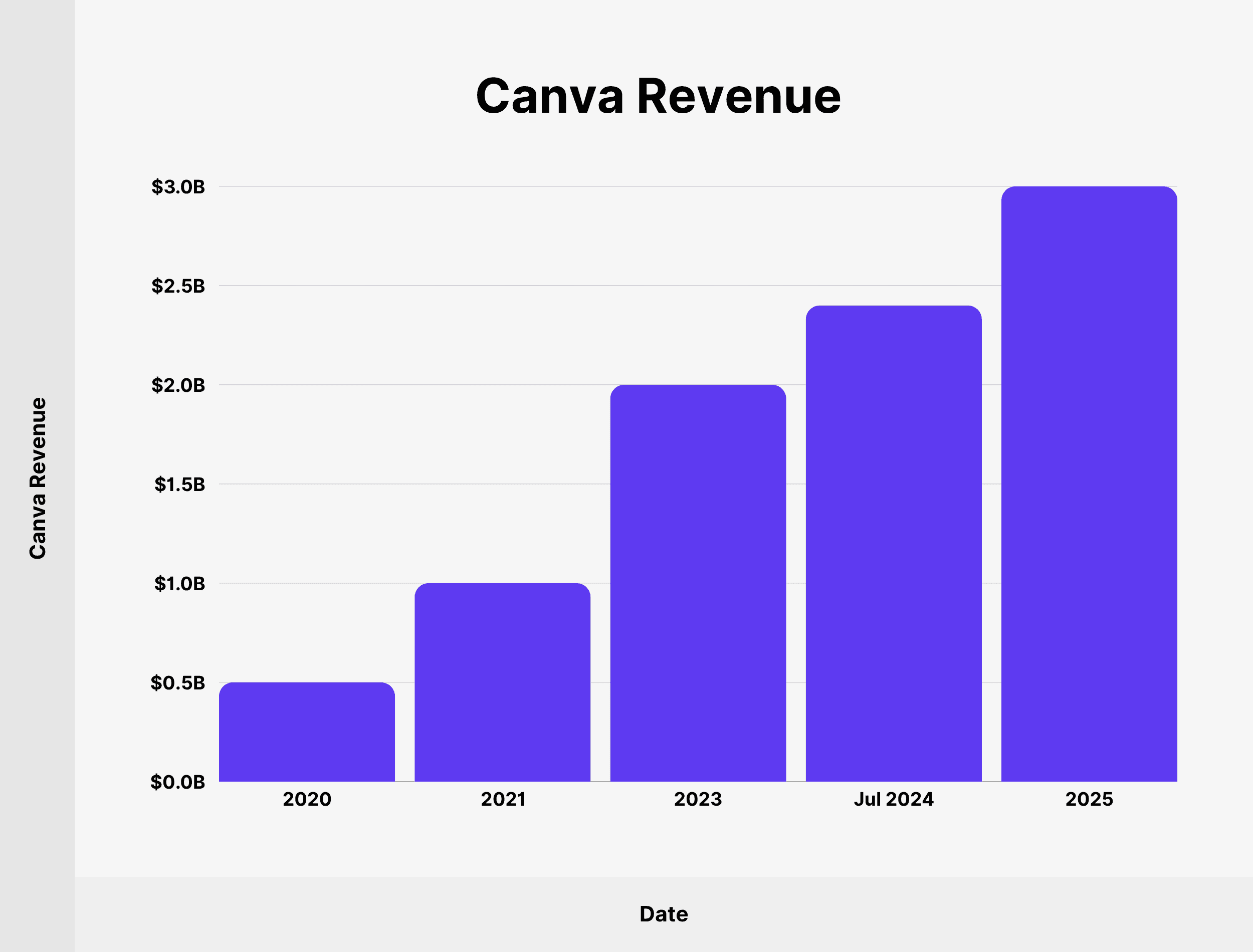
Canva Revenue over the years
People don’t search for “design tools.”
They search for:
Instagram post size
YouTube banner template
resume examples
wedding invitation ideas
Canva built pages for every one of those intents.
1. Template-driven page creation
They created thousands of pages using repeatable structures:
/create/{design-type}//templates/{use-case}//sizes/{platform}/
Examples:

Instagram Post Maker
YouTube Thumbnail Templates
Business Card Designs
Each page = same structure, different keyword.
2. Multi-intent capture (not just one keyword)
Every page targets:
Primary keyword → “YouTube banner size”
Secondary → “YouTube channel art dimensions”
Tertiary → “free YouTube banner template”
So one page ranks for hundreds of variations.
3. Instant utility (this is key)
They don’t just explain.
They let you:
👉 Start designing immediately
This is why they beat blogs.
Blogs gives you information
Canva gives you the information + tool (this also why SaaS companies have an upper hand in SEO, they can provide demonstrable information plus a tool to do exactly what they demonstrate)
4. Internal linking engine
Internal linking is a killer strategy for every SEO that knows how to use it. Canva made sure that every page feeds another:
Template → related templates
Size guide → design tool
Use-case → categories
This creates:
👉 Massive crawl depth
👉 Strong topical authority
👉 Self-reinforcing rankings
Hundreds of thousands of template and design pages all interlinked and creating indexable pages for millions of keywords can be a great spur for growth if done right.
Why Canva’s strategy works and yet, most people fail
1. Canva removed friction
No signup needed upfront.
A user gets to the landing page and immediately designs.
The user is already invested at this stage.
And right there is where Canva captures the user’s information by asking them to create an account to save or download their design.
2. Canva matched intent perfectly
If you search “resume template”… you land on actual templates. Not an article.
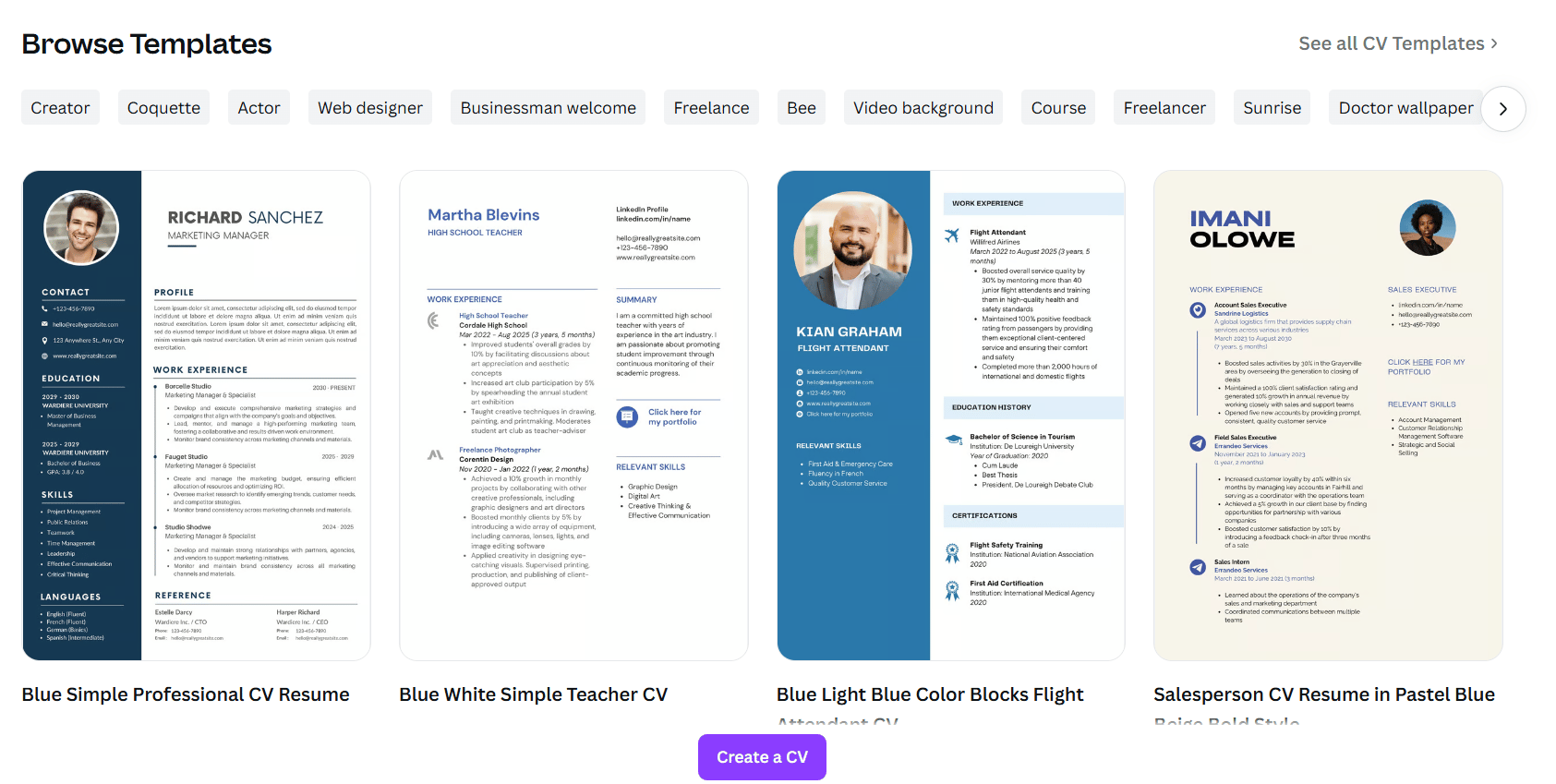
The typical user will now just copy their resume content into a design that they like and be done in a few minutes with fully redesigned material.
3. They scaled breadth, not depth
Instead of 100 “perfect” articles, they shipped over 100,000+ “good enough” pages.
Perfection is a moving target, and you can spend years chasing it with perfectly done content or web pages and still never achieve it. Canva’s concept, “good enough” is good, just ship more.
Takeaway: How you can apply this strategy?
If you’re building anything online, don’t ask: “What blog should I write?”
Ask: “What pages can I generate at scale that solve a micro-intent instantly?”
👉Do not mass generate AI text at scale and call it programmatic SEO, it is not, and Google will punish you deeply for doing that.
Canva did not mass publish AI slop, they built a search-driven page generation system tied directly to product usage. Every page had less content, but was more useful because it matched the user’s needs and search intent at that point in time, and helped them achieve success fast.
That’s a wrap for this week’s Click Raven Teardown.
See you next issue where we break down another growth story.
Until next time,
Ian @ Click Raven